Current And Future Trend Of Printing Technologies.
Long before the first paper was printed on a machine, the China civilization has been printing on woodblocks. It may seem that printing technologies have come a long way, and there are no signs of slowing down. For instance, digital printing is a dominant technology that accounts for over 20% of the entire market. It brought together traditional printing and modern media in a more cost-effective manner.
Instead of facing obsolescence, traditional printing has found the perfect balance in meeting the requirements of various business needs. Modern technology has served as a catalyst that would propel the printing industry into uncharted territories in decades to come.
As the printing industry opens up to technological innovations, businesses will naturally benefit from the emerging printing technologies. Here’s a glance at how present printing technologies have evolved.
Innovations In Internet And Digital Printing
The growth of digital printing is nothing short of astounding for the past decade. What used to be an analog focused industry has since evolved to digital print technology. In a way, printing has become a personalized service for the end users. Speed, customizable and quality are essential in today’s printing industry.
On top of that, the cost of printing has been on a downward trend as digital printing is getting more affordable to the consumer. Despite this, innovations in digital printing are expected to drive the industry growth to a predicted $187.7 billion in 2018. Of course, this optimist prediction must be supported by the adaptability of digital printing to users’ demand.
The main consumers of the print industry have always been the advertising sector. As these major users shifted their advertising avenue to digital channels, the print industry has no choice but to evolve and adapt to develop new printing technologies. Recent years has seen rapid developments in printing driven by the IoT and 3D technology.
3D printing has taken the printing industry by storm, as various manufacturer raced to get the best 3D printers to the market in the past decade. Today, 3D printers play a huge role in reducing prototyping time in the development cycle of various products. It has also brought printing technology to uncharted territories, as researchers are ongoing to print complex human organs from biomaterial.
For consumers, printing has taken a leap with the influence of the IoT. In a world where electronic devices are expected to be connected to the internet, the printer is no difference. IoT enabled printers have resulted in consumers being able to send documents to their printer from any places around the world.
Besides popular printing methods, the printing industry is also slowly making headway in familiar territories. The rise of cryptocurrency has seen the emergence of crypto-printing and block-chain printers. RFID printer continues to get smarter as it transformed conventional warehouse management systems.
Importance Of Brand Marketing In Commercial Printing
Commercial printing is no longer producing standard catalogs for distributions. In 2018, it has become an essential branding strategy. Both product and graphic designers demand nothing but the best printing partner for their clients. And printing suppliers are pressed to produce high-quality results while keeping the cost reasonable.
Orders for signage, labels and specialty print packaging is expected to increase as product manufacturers sought to strengthen their branding effort with modern commercial printing technology. The ever-improving internet technology would have a direct influence on the growth in commercial printing.
Brand-driven environments also seen commercial print service providers take a more forefront approach to their business. Instead of staying in the backend delivering printed products, industry leaders have included training in part of their strategic communication approach.
Partnering with brand marketers, printing companies now offer training to businesses on effective brand communications on their packaging. In a way, printing providers have become more active in placing their companies at the front of a project cycle. This creates a more balanced business ecology for both print providers and their customers.
Challenges In The Printing Industry
While the printing industry continues to develop itself in today’s technology landscape, there are challenges that print providers are concerned off. The primary concern is the continuous shift of traditional print media to digital documents. International bookstores have suffered the preference of e-books over paperbacks and manufacturers will be affected as well.
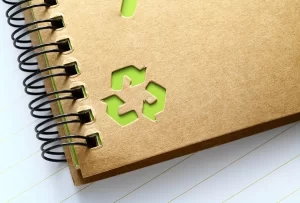
As printing involves papers that are harvested from timber, rising environment concern and stricter government regulations may also affect print providers. Some print providers have adopted the use of recycled papers as part of their environmental obligations and others have set up procedures for proper waste disposal.
The increased quality of home desktop printers can also be a concern for industry printing providers. As end users can print high-quality brochures from the comfort of their home, printing providers must adjust their business model to mitigate the losses incurred by this printing shift.
Ultimately, the printing industry has evolved to an extent that print providers no longer can afford to take a backseat and expect business to prosper anymore. They need to implement an aggressive marketing strategy that allows them to be familiar with their major customers and nurture long-lasting relationships with them.
The Future Of The Printing Industry
Driven by both opportunities and challenges alike, the future may see a continuous transformation in the printing industry that may be revolutionary. For instance, artificial intelligence or AI printing is definitely an interesting technology that will take printing to a newer level. With AI printing, printers can initiate communication with other devices for better efficiency.
The use of inkjet printer may also shift from home printing to industry-wide printers. Inkjet technology has evolved that they are suitable for printing high-quality images for commercial customers. The future may see applications of inkjet printers for media like magazine and catalogs.
As the internet continues to play a decisive factor in businesses, printing providers have no choice but to increasingly change their business models to meet printing demands. This may result in greater use of automation and a reduction in lead time for customers.
Traditional business models for printing agency no longer suffice in the future. Failing to change, these printing businesses will be wiped out by modern printing demands. Printing companies will adopt business models that offer more value to their customers instead of merely producing bulk printed products.
The print industry will also see new integrations of printing with other emerging technologies. As 3D printers, NFC printings, crypto printings, and the likes continue to mature, more revolutionary print technologies will join the fray. This helps the entire printing industry to move away from its traditional environment.
In general, the demand for traditional printing will decline, but new opportunities will continue to open up for the printing industry. Stricter environmental legislation means that future printing trends will gear towards the environmentally friendly material. Safer ink products like vegetable oil-based inks will eventually be preferred.
Instead of being obsolete, printing companies will continue to form strong partnerships with their customers. Both printing providers and business owners that this is an important factor for growth as they head towards the future of digital printing. With the right printing partner, cost, quality, and efficiency can be achieved consistently.
Keeping Printing Cost Low With A Reliable Printing Partner In HK And China
It’s true that using the latest printing technology will be advantageous to various businesses. At the same time, business owners wouldn’t want to end up with printing equipment that takes the focus out of their core business. Besides investing in new printers, they’ll need to train their employees to operate them.
Both these are unnecessary costs that business owners can do without when they team up with the right printing partner. For companies operating in the Asia region, they’ll find that Sun Hing Printing is one of the most reliable printing partners. With more than 27 years in the industry, we’re the best company to outsource businesses’ printing needs.
Not only do we provide competitive rates, our printing capabilities are recognized and certified by various organizations. We are officially certified as a Disney Printing Partner, Fama Printing Partner and Environmental Printing Partner. That speaks volume of our reputation as the most reliable printing service provider in HK and China.
Our ecology friendly printing solution ensures that we minimize wastages during the printing process. This allows the cost savings to be transferred to our customers. With a broad range of services that includes NFC, RFID, and 3D printing, we constantly innovate ourselves to be the perfect printing partner for businesses in the Asia region.
Talk to our helpful customer service personnel to learn more about how businesses capitalize on our latest printing technologies. Click here to learn more about our services.